A streaming content taxonomy built for discovery
Reelgood classifies every movie and show with its own taxonomy of 50+ genres and 250+ tags, organized across six content dimensions. Each title is described by what it's about, who it's about, where it's set, how it feels and how it's told, applied the same way on every streaming service.
Last updated November 9, 2026
What is a content taxonomy?
A content taxonomy is the controlled set of labels used to classify movies and TV shows. Reelgood's taxonomy has two layers. Genres are the broad classification, such as Drama, Western or Anime, and a title can carry several. Tags are the finer layer that describes what a title is actually like, such as workplace, slow burn or con artist.
Most metadata tells you what a title is. Discovery depends on knowing how it feels, who it's about and what it's really exploring. That's the job of Reelgood's tags, and it's why the taxonomy is Reelgood's own rather than a copy of each service's labels.
What are the six content dimensions?
Reelgood organizes its tags around six dimensions of what makes a title what it is. A drama can be a workplace drama that's dark in tone, told as an anthology and centered on corruption. Genre alone captures one of those facts. The six dimensions capture all of them.
Plot and premise
The engine that drives the story: the heist, the time loop, the manhunt, the courtroom battle.
Example tags- thieves and heists
- time travel
- manhunt
- justice system
- revenge
- rescue mission
- survival
Personas and roles
The archetypes at the center of the story, so systems can surface titles around the characters viewers connect with.
Example tags- detectives and investigation
- doctor
- teacher
- hitman
- con artist
- cowboy
- spy
Primary setting and world
Where the story lives, geographically and socially. Setting shapes tone and expectation in ways genre alone doesn't.
Example tags- workplace
- small town
- big cities
- secluded locations
- high school
- space
- medieval
Themes and issues
What a title is genuinely about. These tags power thematic discovery and give ad teams brand-suitability signals.
Example tags- addiction recovery
- social inequality
- death and personal loss
- corruption
- identity and growth
- mental health
- immigration
Tone and vibe
The emotional register. For mood-based discovery, tone is often the strongest predictor of whether a viewer stays.
Example tags- witty
- dark and intense
- feel good
- quirky and offbeat
- slow burn
- dark comedy
Format and structure
How the story is told, which sets a viewer's expectations before they press play.
Example tags- mockumentary
- anthology
- found footage
- true story
- based on novel
- reboots remakes and spin offs
- unscripted
How does the taxonomy describe a real title?
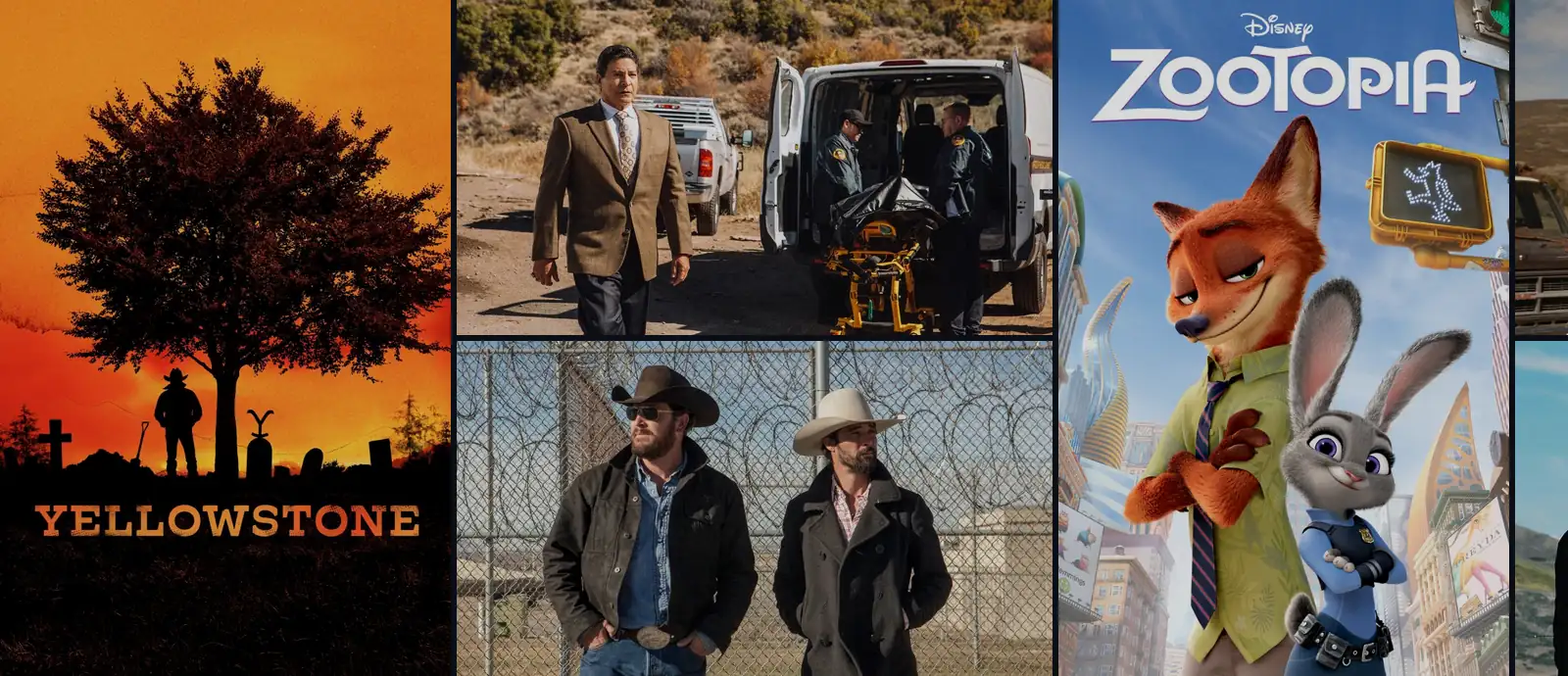
Here are two titles as Reelgood classifies them. Genres are shown in green and tags in purple.

Zootopia
Genres- Animation
- Family
- Children
- Mystery
- Comedy
- Crime
- Action & Adventure
- Family Animation
- Friendship
- Disney
- Con Artist
- Social Inequality
- Identity & Growth
- Big Cities
- Police
- Detectives & Investigation
- Feel-good

Yellowstone
Genres- Western
- Drama
- Cowboy
- Wealth & Privilege
- Organized Crime
- Family Relationships
- Violence
- Secluded Locations
- Survival
- Government & Politics
- Outdoors & Nature
- Dark & Intense
Yellowstone's genres say "Western drama." Its tags add the ranch setting, the family power struggle, the crime, the politics and the tone, which is what a recommendation system needs to find the next show for a Yellowstone fan.
How does Reelgood keep tags accurate?
Adding tags at scale is easy. Adding accurate tags at scale isn't, so Reelgood applies three controls to every assignment.
Relevance threshold
A tag is applied only when its subject is a meaningful part of the title, not because a word appears somewhere in the synopsis.
10 to 12 tag cap
A title with 40 tags tells you everything and nothing. Six highly relevant tags beat twelve marginal ones.
Differentiation rules
Explicit rules separate categories that are easy to conflate, such as anime versus animation and holiday versus general seasonal content.
Can Reelgood add tags for the content you care about?
Yes. Reelgood's taxonomy keeps growing: new tags are added as new kinds of content and viewer interests emerge, and existing tags are never removed, so the filters, models and reports you build on today's tags keep working. Reelgood can also add specific tags on request. If a streaming service has a particular interest in a type of content, Reelgood can add a tag for it to the taxonomy and apply it across the catalog.
Ask About a Custom TagWhat can teams build with the taxonomy?
Recommendations
Suggest the next title from shared tags like workplace, relationships and quirky and offbeat, not just shared genre.
Brand suitability
AVOD and ad teams use tone and theme tags to avoid unsuitable placements or target the context a brand wants.
Search and filters
Faceted search like feel-good shows set in small towns, with several tag dimensions to filter on.
Catalog strategy
Find catalog gaps, benchmark competitor libraries and compare genre mix by service. See the genre fingerprint analysis.
What genres and tags are in Reelgood's taxonomy?
Reelgood's taxonomy currently holds 50+ genres and 250+ tags. The list grows as new content patterns emerge, and tags are added without removing existing ones.
Genres
- Action & Adventure
- Animation
- Anime
- Arts & Culture
- Biography
- Black & White
- Children
- Classics
- Comedy
- Crime
- Cult
- Documentary
- Drama
- Faith & Spirituality
- Family
- Fantasy
- Film-Noir
- Food
- Game Show
- Health & Wellness
- History
- Home & Garden
- Horror
- Independent
- International
- Korean Drama
- LGBTQ
- Latino
- Lifestyle
- Mini-Series
- Music
- Musical
- Mystery
- News
- Podcast
- Reality
- Romance
- Science-Fiction
- Sitcom
- Soap
- Special Interest
- Sport
- Stand-up & Talk
- Suspense
- Talk Show
- Telenovela
- Thriller
- Travel
- Variety
- War
- Western
Tags
Tag names are shown here as readable labels. The first 20 are a representative sample; the rest follow alphabetically. In the data, tags are delivered as lowercase slugs, for example quirky-and-offbeat. Genre and tag list as of September 2026. New tags are added regularly.
Taxonomy analysis on the Reelgood blog
Explore the dataset
Streaming Metadata
Full movie, show, episode and talent records, and how Reelgood maps to your IDs.
See the records →Global Coverage
15 countries, localized titles and synopses, and age ratings from 11 rating systems.
See coverage →Title Artwork
Posters, backdrops, stills and logos in eight image types, up to 3840 x 2160.
See the artwork →Historical Availability
Every streaming window for a title, by service and country, dated to the day.
See availability →Need the complete field list? See the Data Dictionary.
Frequently asked questions
What's the difference between a genre and a tag in Reelgood's taxonomy?
In Reelgood's taxonomy, genres are the broad top-level classification, such as Drama, Western or Anime, and every title carries one or more of Reelgood's 50+ genres. Tags are finer descriptors covering plot, characters, setting, themes, tone and format. Reelgood uses 250+ tags, and the average title carries about six.
How many genres and tags does Reelgood use?
Reelgood uses 50+ genres and 250+ tags, applied across 290,000+ movies and 74,000+ TV shows. Every title is classified with the same taxonomy, whichever service or country it's available in.
Does Reelgood add new tags, and can it add tags on request?
Yes. Reelgood adds new tags regularly and never removes existing ones, so filters and models built on today's tags keep working. Reelgood can also add specific tags on request: if a streaming service has a particular interest in a type of content, Reelgood can add a tag for it and apply it across the catalog.
How does Reelgood decide which tags a title gets?
Reelgood applies a tag only when it clears a relevance threshold, meaning the subject is a meaningful part of the title, not a passing mention. Each title is capped at 10 to 12 tags, and explicit rules separate categories that are easy to confuse, such as anime and animation, or holiday and general seasonal content.
Are Reelgood's genres the same as each streaming service's genres?
No. Reelgood's genres and tags are its own taxonomy, applied the same way to every title on every service and in every country. A Western on Netflix and a Western on Peacock carry the same genre, which makes catalogs comparable across services in a way each service's own labels aren't.
Which teams use Reelgood's content taxonomy?
Recommendation and discovery teams use Reelgood's tags as signals for similar-title suggestions. AVOD teams use tone and theme tags for brand suitability, search teams build filters on them, and acquisition and licensing teams use them to find catalog gaps and benchmark competitor libraries.
See the taxonomy on your own catalog
Pick a title segment or content category and we'll send a sample with the full genre and tag set applied.
Request a Tagged Sample
© Copyright 2026. All rights reserved.
T&C | Privacy Policy
© Copyright 2026. All rights reserved.
T&C | Privacy Policy